 X
X
 100%
100%
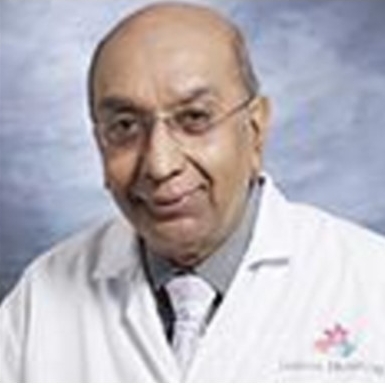
DR RAM MALKANI
Dermatologist and Cosmetologist
- Fees: INR 1,500
-
Friday 2:00 PM - 4:00 PM
(See all timing)Monday 2:00 PM - 4:00 PM,
Wednesday 2:00 PM - 4:00 PM,
Friday 2:00 PM - 4:00 PM
Introduction
Dr Ram Malkani is one of the best Dermatologists of Mumbai, India and is currently a Consultant Dermatologist at the Jaslok Hospital & Research Centre. He has almost 4 decades of experience in this field.
Hospital Associations
Jaslok Hospital And Research Centre
Services/Interest
- Eczema
- Psoriasis
- Fungal Infections
- Warts
- Fotofacials With Ipl
- Acne And Acne Scars
- Aging And Sun-Damaged Skin
- Chemical Peeling And Microdermabrasion
- IPL Hair Removal
- Liver Spots And Aging Hand
- Rosacea Treatments
- Medical Skin Care
Experience
1) Honorary Dermatologist at the Jijamata Hospital, New Bombay, Vashi from March 1976 to January1979. 2) Honorary Dermatologist at the Lions Club Diagnostic Centre,Navjivan Society, Bombay Central from 1974 to 1978. 3) Honorary Dermatologist at the Mahim Nagrik Sabha from 1973 to 1978. 4) Joint Secretary in the 'Leucoderma Society' in April 1978. 5) Consultant Dermatologist at the Guru Nanak Hospital,Bandra(E),Mumbai from 199 to 2007. 6) Convenor of the HIV Prevention Programme of the IADVL Maharashtra Branch from 1994. 7) Visiting Muscat, Oman as a visiting consultant Dermatologist at the AL Amal Medical Centre from August 1996, regularly every month. 8) Appointed as member Scientific committee for the XXXII and National Conference of the IADVL held at Mumbai Jan 22-25 '04. 9) Conducting IADVL HIV Anonymous testing Centre since 1994. 10) Judge at the Posters award at the Annual General Body Meeting of the IADVL Maharashtra branch held at Rennaissance, March 2003. 11) Appointed Editorial Board on 'AIDS update' a quarterly publication of the Govt of Maharashtra. The Universities of Texas, Houston, AIDS Research Control Organisation (ARCON), Mumbai and the 'MGM'Medical College, New Mumbai from September 2000. 12) Co-ordinator for the year 2004-05 for the department of dermatology at the Jaslok hospital and research center.
Awards and Recognitions
1) Gave Oration on 'Oculoctaneous Diseases' at the Maharashtra Ophthalmology association conference at the Amar Gian Auditorium, Mumbai 1994. 2) Won the first prize on the Best Poster award at the XXIVth National Conference of the IADVL held at Ahmedabad Jan 25-28 1996 on the paper "Maharashtra Branch's Anonymous testing centre (ATC) at Bombay". 3) Won the Best Paper award on Sweet's Syndrome at the Practising Dermatologists,IADVL Quarterly Scientific meeting held on Dec' 01 at Lonavala. 4) Won a prize in a Quiz contest at the 20th World Congress on Dermatology June 30-July 5 2002 held at Paris.
Education
1) M.D. (Skin) passed at the first attempt in May 1973 from the Grant Medical College, Bombay University. 2) Diploma in Venereology & Dermatology (D.V.D.) passed in April 1971, from the Bombay University. 3) Diploma in Dermatology & Venereology (D.D.V.) passed at the first attempt in October 1971, from the college of Physicians & Surgeons, Bombay.
I Speak
English, Hindi
Feedback For Dr Ram Malkani
Write FeedbackPrachi Tachakra
(19 Apr 2023)Ranjana Pendharkar
(23 Dec 2022)Jaslok Hospital And Research Centre Timing
Monday
2:00 PM - 4:00 PM
Wednesday
2:00 PM - 4:00 PM
Friday
2:00 PM - 4:00 PM
Online Consultations
Monday
9:00 AM - 8:00 PM
Tuesday
9:00 AM - 8:00 PM
Wednesday
9:00 AM - 8:00 PM
Thursday
9:00 AM - 8:00 PM
Friday
9:00 AM - 8:00 PM
Saturday
9:00 AM - 8:00 PM
Who is a dermatologist?
Dermatology is the branch of Internal Medicine concerned with the health of the skin, hair, and nails. Dermatologists are medical physicians with the highest training and expertise in this field, and they usually combine several activities like seeing patients in public hospital clinics and/or in private practices, teaching, acting as consultants to other specialists, and delving into clinical or basic research. Dermatologists must have expertise in basic sciences including pathology, microbiology, biochemistry, physics, endocrinology, and physiology. As skin diseases are often associated with internal conditions, they must be familiar with all the other medical specialties.
Do dermatologist treat skin cancer?
Yes, most forms of skin cancers such as basal and squamous cell cancers as well as pre-cancers are treated by dermatologists. If the cancer is more advanced and has spread to other parts of the body, you may be treated by another type of doctors, such as a surgical oncologist, medical oncologist or a radiation oncologist.
Do dermatologist performs surgery?
- Dermatologists perform skin surgery in many situations:
- To prevent or provide early control of disease, eg to remove skin cancer.
- To improve the skin's appearance by removing growths, discolorations, or damage caused by sunlight, aging, or disease.
- To perform a biopsy.
When should you visit a dermatologist?
You should visit a dermatologist when you spot a mole that has irregular borders or is changing its shape or size. Moles, freckles, or birthmarks are fairly common. But there is a serious possibility that they could alter over time. A change in a mole or growth on the body that’s itchy or bleeds or doesn’t heal on its own is usually the first sign of skin cancer.
You should visit your dermatologist when you’re losing more hair than usual or when you notice a bald spot. While it’s natural to lose a few hairs here and there, widening part, a growing bald spot, or significant shedding could be signs of something more serious.
You should visit your dermatologist have rough, scaly patches on your scalp, elbows, lower back, or knees. This condition is oftentimes psoriasis, which is caused by an autoimmune disorder where the immune system sends signals that tell skin cells to grow too quickly.
You have itchy, flaky skin that could be more than a seasonal side effect.
You should see a doctor if you have a painful, cystic pimple, which is the result of stress, hormonal fluctuations, and bacteria that is much harder to control.
What are the tests performed by a dermatologist?
- Patch testing:
- Biopsy:
- Punch
- Shave
- Wedge excision
- Scrapings:
It helps diagnose fungal infections and scabies.
- Examination by Wood light:
To distinguish hypopigmentation from depigmentation
To diagnose and define the extent of lesions
- Tzanck testing:
To diagnose viral diseases, such as herpes simplex and herpes zoster.
- Diascopy:
To decide whether erythema in a lesion is due to blood within superficial vessels.
Diascopy can also help identify sarcoid skin lesions.
What are the diseases treated by a dermatologist?
Acne, Bites, Benign Tumors, Bullous Diseases, Dermatitis, Drug Rash, Hair Diseases, Infections, Inherited Conditions, Papulosquamous, Pigment Disorders, Pre-Cancerous Lesions, Skin Cancer, Erythema Multiforme, Erythema Nodsum, Erythroderma, Granuloma Annulare, Hemangiomas, Hyperhidrosis (Excessive Sweating), Keloids, Keratosis Pilaris, Lichen Sclerosis et Atrophicus, Lichen Simplex Chronicus, Photodamage, Pityriasis Rosea, Scars, Spider Veins, Staphylococcal Scalded Skin, Stevens-Johnson Syndrome, Toxic Epidermal Necrolysis, Urticaria (hives), and Vasculitis, Wrinkles (fine and deep).